
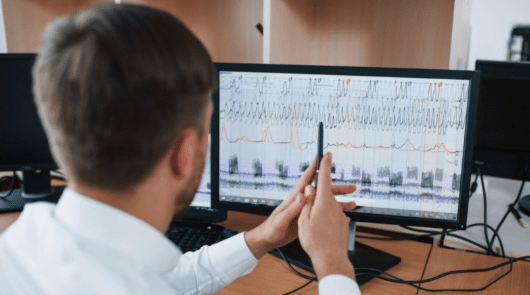
Polygraph tests have a strange reputation. Some people treat them like a truth machine straight out of a crime show. Others think they’re complete nonsense. The reality sits somewhere in the middle—and it’s a lot more interesting than the myths.
If you’ve ever pictured a nervous suspect sweating under harsh lights while a needle jumps wildly on a graph, you’re not alone. That image is everywhere. But it’s also misleading.
Let’s clear the air.
The “Lie Detector” Isn’t Actually Detecting Lies
Here’s the first thing most people get wrong: a polygraph doesn’t detect lies. Not directly.
What it measures is your body’s response—things like heart rate, breathing, and skin conductivity. The idea is simple: when people lie, they often feel stress, and that stress shows up physically.
But here’s the catch. Stress isn’t exclusive to lying.
Imagine you’re asked a serious question in a formal setting. Even if you’re telling the truth, you might feel anxious. Your heart rate spikes. Your palms sweat. The machine records that. It doesn’t know why you’re reacting—it just knows you are.
That’s a big distinction.
“If You’re Innocent, You’ll Pass” — Not So Fast
It sounds logical. If you didn’t do anything wrong, you have nothing to worry about, right?
Not really.
Let’s say someone is falsely accused of something serious. They’re already stressed walking into the test. Their reputation is on the line. Maybe their job too. Even if they’re completely honest, their body might react strongly to certain questions.
Now flip it.
A person who is lying but stays calm under pressure might not trigger the same physiological spikes. Some people are naturally composed. Others have learned to control their reactions.
So the outcome isn’t as clean as “truth equals pass, lie equals fail.” It’s more nuanced—and sometimes messy.
Polygraphs Aren’t Foolproof in Court
You might be surprised to learn that polygraph results are often not admissible in court.
That alone tells you something.
Courts rely on evidence that meets strict reliability standards. Polygraphs don’t always make the cut because their accuracy can vary. Different examiners, different questioning styles, and different subjects can all affect the outcome.
There are places where polygraph results are allowed under specific conditions, but generally speaking, they’re treated with caution.
That doesn’t mean they’re useless—it just means they’re not definitive proof.
The Examiner Matters More Than You Think
People often focus on the machine. The wires, the sensors, the graphs. But the person running the test plays a huge role.
A skilled examiner knows how to structure questions, build rapport, and interpret results carefully. A less experienced one might misread signals or ask poorly phrased questions that confuse the subject.
Think of it like a medical test. The equipment matters, sure. But so does the person interpreting the results.
A rushed or biased examiner can skew things without even realizing it.
You Can’t Just “Hack” a Polygraph Easily
There’s a popular idea that you can beat a polygraph with simple tricks. Bite your tongue. Do mental math. Think scary thoughts during control questions.
You’ve probably heard at least one of these.
Here’s the thing: modern polygraph test aren’t that easy to fool. Examiners are trained to spot irregular patterns and countermeasures. If your responses look artificially manipulated, that raises red flags.
That said, it’s not impossible to influence results. Some people have tried various methods with mixed success. But it’s far from a guaranteed loophole.
Trying too hard to “game” the test can actually make things worse.
Polygraphs Are Still Used—But Not How You Think
Despite all the criticism, polygraphs haven’t disappeared. They’re still used in certain contexts, especially in government and law enforcement settings.
But they’re rarely the final word.
Instead, they’re often part of a larger process. A tool for gathering information. A way to encourage honesty during interviews.
Sometimes the mere idea of taking a polygraph makes people more likely to tell the truth beforehand. It’s a psychological effect as much as a technical one.
In that sense, the test isn’t just measuring responses—it’s shaping behavior.
Nervousness Is Normal (and Expected)
A lot of people worry about “failing” because they’re naturally anxious.
Here’s the reality: examiners expect you to be nervous.
You’re sitting in a controlled environment, hooked up to sensors, being asked serious questions. Of course your body reacts. That’s not unusual—it’s part of the baseline they consider.
Before the actual test, there’s usually a pre-test phase where the examiner explains the process and establishes a reference for your normal responses.
So being nervous doesn’t automatically work against you. It’s already baked into the process.
The Questions Are More Structured Than You Think
It’s not just a random series of questions.
Polygraph tests follow specific formats. There are typically “relevant” questions tied to the issue being investigated, along with “control” questions designed to provoke a general stress response.
For example, you might be asked something directly related to the matter at hand, and then something broader like whether you’ve ever lied to avoid trouble.
The comparison between your reactions helps the examiner form an opinion.
That structure matters. Without it, the data wouldn’t mean much.
Movies and TV Get It Wrong (Almost Every Time)
Let’s be honest—Hollywood hasn’t done polygraphs any favors.
The dramatic spikes on a screen, the instant declarations of “He’s lying,” the high-stakes tension… it’s entertaining, but it’s not how things work in real life.
Actual polygraph exams are slower, more controlled, and frankly, a bit less exciting. There’s repetition. There’s calibration. There’s analysis after the fact.
No one is shouting conclusions in the moment based on a single question.
If anything, the real process feels more methodical than dramatic.
Passing or Failing Isn’t Always Black and White
Results are often categorized in ways that leave room for interpretation.
Instead of a simple pass/fail, you might see outcomes like “deception indicated,” “no deception indicated,” or “inconclusive.”
That last one is more common than people realize.
“Inconclusive” doesn’t mean guilt or innocence. It just means the data wasn’t clear enough to make a confident call. And that can happen for all sorts of reasons—nervousness, inconsistent responses, or even technical issues.
So the result isn’t always a clean verdict. It’s an assessment.
Why People Still Believe the Myths
Part of it comes down to storytelling.
A machine that can detect lies sounds powerful. Almost magical. It fits neatly into the way we like to think about truth and justice—clear, objective, undeniable.
But real life rarely works that way.
Another reason is visibility. When polygraphs are mentioned, it’s often in high-stakes situations—criminal cases, security clearances, dramatic interviews. That amplifies their perceived authority.
And once an idea sticks—like “the machine knows if you’re lying”—it’s hard to shake.
So, Are Polygraph Tests Worth Trusting?
Here’s the honest answer: they can be useful, but they’re not definitive.
Think of a polygraph as one piece of a larger puzzle. It can provide insights, raise questions, or support other findings. But it shouldn’t be the sole basis for major decisions.
Context matters. So does interpretation.
If you approach it as a perfect lie detector, you’ll be disappointed—or misled. If you see it as a tool with limitations, it starts to make more sense.
The Bottom Line
Polygraph tests live in that gray area between science and psychology.
They measure real physical responses, but those responses don’t map neatly onto truth and lies. Human behavior is more complicated than that.
The biggest myths—absolute accuracy, guaranteed outcomes, easy tricks—fall apart once you look a little closer.
What’s left is something more grounded. A method that can be helpful in the right hands, in the right context, with the right expectations.
And maybe that’s the better way to think about it—not as a truth machine, but as a conversation tool with wires attached.













Leave a Reply