
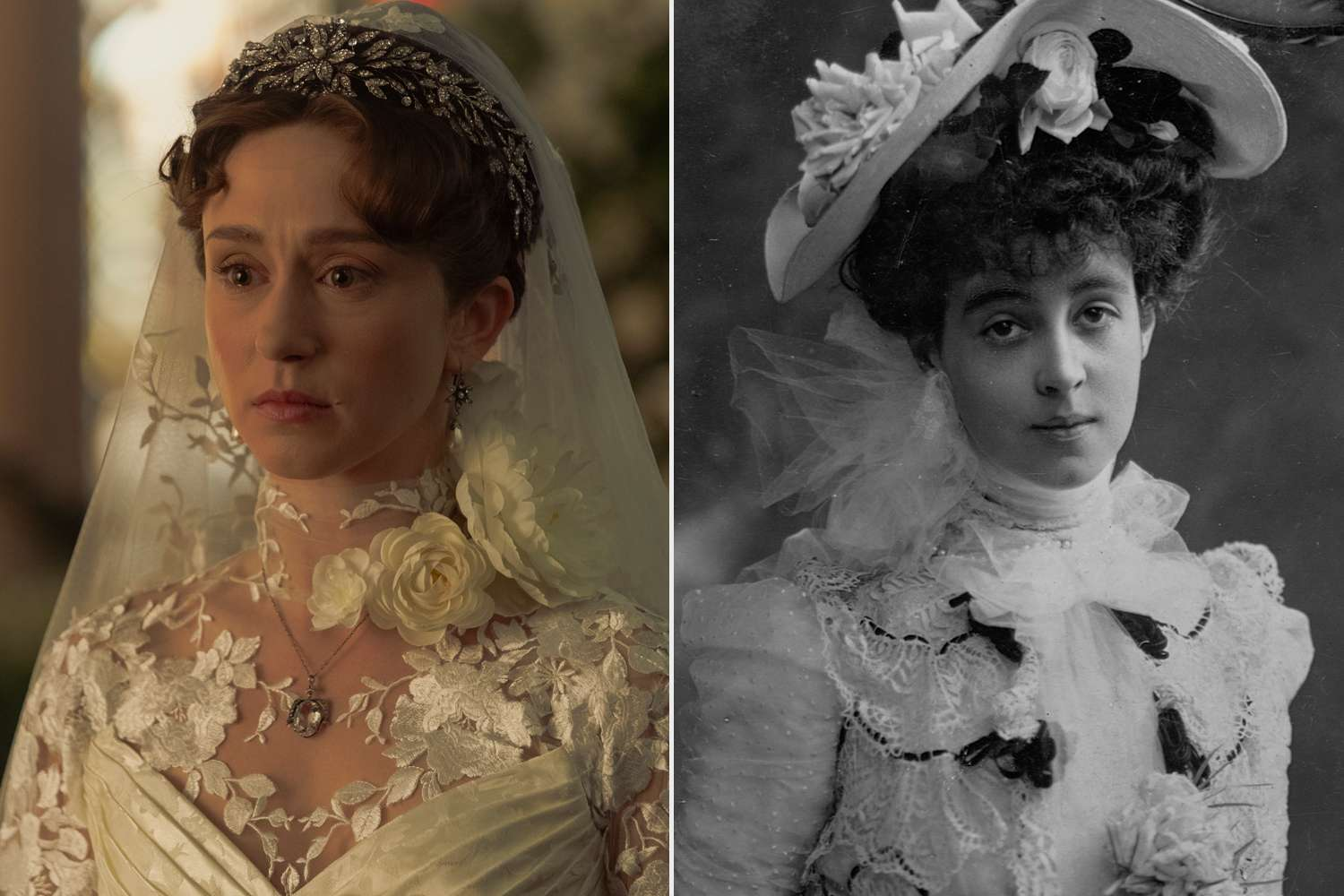
When viewers search for “Gladys Gilded Age,” they are usually looking for information about Gladys Russell, one of the most interesting young characters in HBO’s period drama The Gilded Age. Played by Taissa Farmiga, Gladys begins the series as the sheltered daughter of George and Bertha Russell, a wealthy family determined to establish itself among New York’s elite. Although she initially appears to be a quieter presence compared with the show’s more forceful personalities, her storyline gradually becomes one of the clearest examples of how women could be caught between family ambition, social expectations, romance, and personal freedom.
Created by Julian Fellowes, The Gilded Age explores the intense competition between established “old money” families and ambitious newcomers who built their fortunes during America’s rapid industrial expansion. Gladys is positioned directly at the center of that conflict because her family has enormous wealth but lacks the social pedigree her mother desperately wants. Her marriage prospects therefore become about much more than love. They are connected to the Russell family’s social advancement and Bertha’s determination to secure a permanent place among New York’s most powerful families.
What makes Gladys especially compelling is the tension between the life her family wants for her and the life she might choose for herself. Her journey becomes increasingly important as the series develops, particularly as she moves from sheltered young woman to someone forced to confront the consequences of decisions made by others. Here’s a closer look at Gladys Russell, her family background, her relationships, and why the character has become such an important part of The Gilded Age.
Who Is Gladys Russell in The Gilded Age?
Gladys Russell is the only daughter of George and Bertha Russell and the younger sibling of Larry Russell. Her father has accumulated a vast fortune through the railroad industry, while her mother is intensely focused on transforming the family’s financial success into social acceptance. Unlike some characters who actively pursue power themselves, Gladys initially finds herself being moved around the social chessboard by the people closest to her.
At the beginning of the series, Gladys is portrayed as young, inexperienced, and heavily protected. Her upbringing has been comfortable in material terms, but her freedom is limited by the expectations of her family and social class. She has been raised within an environment where appearances matter enormously, and her eventual introduction into society is treated as a major event rather than simply a personal milestone. Her position as a wealthy heiress naturally attracts attention, but the attention also comes with pressure.
Gladys’s situation reflects one of the central themes of The Gilded Age: money can buy extraordinary comfort, but it does not necessarily provide freedom. Her family’s wealth gives her access to elite society, yet her personal choices remain heavily influenced by her parents. This contradiction is essential to understanding why her character resonates with audiences. She possesses privileges that many people of her time could never imagine, but she is still restricted by the rigid rules of her world.
Taissa Farmiga Plays Gladys Russell
The character of Gladys Russell is played by Taissa Farmiga, who brings a subtle quality to a role that becomes increasingly dramatic as the story progresses. Farmiga’s performance allows Gladys to feel different from the stronger personalities surrounding her. She is not naturally as aggressive as Bertha, as openly rebellious as some younger characters, or as socially calculating as the people competing for influence around her.
That quieter performance style is important because Gladys’s conflicts often happen internally. She is frequently placed in situations where she must balance what she feels with what is expected of her. Farmiga communicates much of that tension through expressions and restrained reactions rather than dramatic speeches. The result is a character whose emotional development can be easy to overlook at first but becomes much more significant over time.
Farmiga has also discussed Gladys’s journey and the character’s changing relationship with freedom, love, and adulthood. The role gives her an opportunity to portray someone growing up in a world where personal independence is difficult to achieve, especially for a wealthy young woman whose marriage has implications far beyond her own happiness. By the third season, Gladys’s storyline has become a major part of the show’s broader examination of power and family ambition.
Gladys and Bertha Russell Have a Complicated Relationship
One of the most important relationships in the series is the one between Gladys and her mother, Bertha Russell. Bertha is a fiercely ambitious woman who understands that social status can determine how a family is treated. Because the Russells are wealthy newcomers, she believes they must work harder than established families to gain acceptance.
For Bertha, Gladys’s future is closely connected to that mission. A prestigious marriage could give the Russell family something money alone cannot easily purchase: an association with old European or aristocratic status. This creates a fundamental conflict between mother and daughter. Bertha may believe she is securing her daughter’s future, but Gladys experiences the situation as a loss of control over her own life.
Their relationship is therefore more complicated than a simple story about a controlling mother and an unhappy daughter. Bertha genuinely operates according to the values of her time and her own understanding of survival and success. She has built a powerful life by being strategic and determined, and she expects Gladys to benefit from the opportunities that strategy creates. The problem is that Gladys does not necessarily want the same things her mother wants. That difference becomes increasingly difficult for both women to ignore.
Gladys’s Search for Independence
Gladys’s story can be viewed as a coming-of-age journey set against a particularly restrictive social system. She starts out with very little experience of the world beyond her family’s carefully controlled environment. As she encounters romance and the wider social scene, she begins to recognize that her future may not automatically align with her parents’ plans.
Her desire for independence is not expressed through constant rebellion. Instead, it emerges gradually. Gladys wants the ability to make meaningful decisions about her own life, particularly when it comes to love and marriage. That desire is understandable even by modern standards, but it becomes especially significant when viewed within the historical context of the late nineteenth century.
The irony is that Gladys’s wealth makes her situation both easier and harder. She has financial security, but her fortune also makes her an attractive target for families seeking social or economic advantage. Her parents therefore become extremely cautious about the people who approach her. The more valuable Gladys becomes as a social asset, the more difficult it is for her to be treated simply as an individual making personal choices.
Gladys and the Question of Love
Romance is central to Gladys’s character development because it introduces a conflict between emotional connection and social calculation. Throughout the series, her romantic possibilities are shaped by the expectations of her family and the wider society in which she lives. Her feelings may be sincere, but sincerity does not necessarily have the power to overcome wealth, status, and family strategy.
This is where Gladys’s storyline becomes particularly effective. The audience can see the difference between what she wants emotionally and what others believe is best for her. She is not simply choosing between two romantic partners. She is effectively being asked to choose between personal freedom and the expectations attached to her family’s position.
The series uses this conflict to explore a broader historical reality. Wealthy families during the Gilded Age often treated marriage as an important social and financial arrangement. Love could certainly be part of the equation, but it was not always the deciding factor. For a young heiress, marriage could affect family alliances, social reputation, inheritance, and political influence. Gladys’s experiences bring those pressures into a personal and emotional story.
Gladys’s Marriage and the Duke of Buckingham
One of the biggest developments in Gladys’s story occurs when she is connected to the Duke of Buckingham. The marriage storyline dramatically changes the direction of her character because it represents the exact kind of social advancement Bertha has been pursuing. At the same time, it raises serious questions about how much control Gladys actually has over her own future.
The match also carries historical echoes. Gladys’s storyline has been compared with the real-life marriage of Consuelo Vanderbilt, the American heiress who married the Duke of Marlborough. Like Gladys, Consuelo came from enormous American wealth, and her marriage connected that wealth with an aristocratic title. The comparison is particularly interesting because The Gilded Age frequently blends fictional characters and events with real historical influences.
For Gladys, the marriage is emotionally complicated because the title and prestige that make the match attractive to her mother do not automatically guarantee personal happiness. The storyline forces viewers to ask whether gaining social status is worth surrendering control over one’s future. It also demonstrates how Bertha’s ambitions can have consequences for the very people she believes she is helping.
Gladys Gilded Age Season 3 Storyline
By the third season, Gladys’s storyline becomes significantly more prominent. The season premiered in June 2025 and continued to develop the Russell family’s ambitions, with Gladys’s marriage becoming one of the major personal stories connected to Bertha’s social strategy. Taissa Farmiga remained part of the principal cast as Gladys, whose position within the Russell family had evolved considerably since the show’s beginning.
Season 3 presents Gladys as someone who has been pushed into adulthood under extraordinary circumstances. The young woman viewers first met was protected and sheltered, but her later experiences force her to understand the complicated realities of marriage, status, and power. Her relationship with her parents also changes as she becomes more aware of the motivations behind their decisions.
The season also gives the character a more complicated emotional future. Rather than treating Gladys as simply a victim of her circumstances, the story explores how she adapts to the world she has entered. That development is important because it allows her to become a more active participant in her own life. The result is a character who may not have complete freedom but is increasingly capable of understanding the system around her and finding ways to navigate it.
Is Gladys Russell Based on a Real Person?
Gladys Russell is a fictional character, but her story is strongly influenced by real people and historical circumstances. The most frequently discussed comparison is Consuelo Vanderbilt, an American heiress who married the Duke of Marlborough. The parallels between the two stories are striking enough that viewers can see how historical events inspired the show’s fictional narrative.
This connection makes Gladys more interesting because it places her personal struggles within a larger historical pattern. During the Gilded Age, American industrial fortunes grew rapidly, while European aristocratic families often faced financial difficulties. Marriages between wealthy American heiresses and European nobles could therefore serve mutual interests. American families gained titles and social prestige, while aristocratic families gained access to money.
The Gilded Age uses this historical background as dramatic material rather than presenting Gladys as a direct copy of Consuelo Vanderbilt. The fictional storyline allows the writers to explore the emotional consequences of such arrangements while still reflecting the real social pressures of the period. It is one of the reasons Gladys’s story feels connected to the larger historical world of the series.
Why Gladys Is an Important Character in The Gilded Age
Gladys may not dominate every episode, but her storyline represents several of the show’s most important themes. Through her, viewers see how women could be treated as symbols of family status and ambition. Her marriage prospects are discussed in terms of money, titles, reputation, and influence, showing how little room there could be for individual choice within elite society.
She also provides an interesting contrast to Bertha. Both women are connected to ambition, but they approach the world differently. Bertha actively fights for recognition and power, while Gladys initially seeks the freedom to live her own life. Over time, however, Gladys begins to understand that surviving in her social environment may require some of the same strategic thinking her mother has always used.
This makes her character arc particularly compelling. Gladys’s story is not simply about escaping her mother’s influence. It is about learning from the world around her and deciding what kind of person she wants to become. Her journey raises the possibility that she could eventually transform the very qualities she once resisted into tools for creating her own independence.
The Future of Gladys in The Gilded Age
The future of Gladys remains one of the most intriguing questions surrounding the Russell family. After everything she has experienced, the character has reached a point where her choices could influence the direction of several major storylines. Her marriage, family relationships, and evolving understanding of power all create opportunities for the series to explore new dimensions of her personality.
One particularly important aspect of her later storyline is motherhood. Season 3’s finale reveals that Gladys is pregnant, adding another major layer to her character. The development is significant because it places her in a new position within the family and potentially gives her a different perspective on the choices her own mother made. It also creates an interesting parallel between Gladys and Bertha, particularly as Gladys begins navigating adulthood and family responsibilities in her own way.
At the same time, Gladys’s future does not have to follow a predictable path. The series has repeatedly shown that characters can change their relationships with money, status, and family expectations. Gladys may continue to embrace the life she has been given, challenge it from within, or eventually seek greater independence. Whatever direction the story takes, her journey remains closely tied to the larger question at the heart of The Gilded Age: what happens when personal desires collide with the ambitions of powerful families?
Final Thoughts on Gladys Gilded Age
The phrase “Gladys Gilded Age” ultimately points to much more than a character search. Gladys Russell represents the complicated position of a young woman born into immense wealth but raised in a world where personal freedom could still be limited by family expectations. Through her story, The Gilded Age explores the difference between having privilege and having control over one’s own life.
Taissa Farmiga’s performance helps make Gladys a fascinating part of the ensemble. Her character begins quietly, but the emotional stakes surrounding her gradually become larger. Her relationship with Bertha, her experiences with romance, and her marriage to the Duke of Buckingham all reveal different sides of a society where wealth and status could determine the course of a person’s future.
What makes Gladys particularly memorable is that her story is still evolving. She is not simply the sheltered daughter of the Russell family anymore. She has experienced the consequences of her mother’s ambitions and has begun building an identity within a world that often expects women to play predetermined roles. As The Gilded Age continues, Gladys has the potential to become one of its most compelling examples of how a person can inherit both enormous privilege and enormous pressure at the same time. Her journey is a reminder that behind the spectacular houses, extravagant gowns, and glamorous parties of the Gilded Age were real questions about freedom, family, love, and the price of social success.












Leave a Reply