
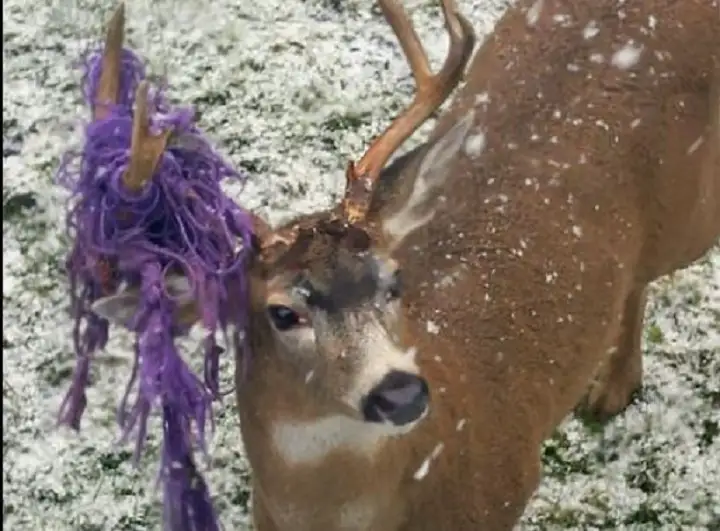
The phrase deer with hammock antlers has recently gained attention among wildlife enthusiasts, hunters, photographers, and curious readers. At first glance, it may sound like a mythical creature or a creative nickname, but it actually refers to an unusual antler growth pattern seen in some deer. Instead of growing in the typical upright shape, the antlers droop or spread in a way that resembles a hanging hammock.
deer with hammock antlers
In this article, we’ll explore what a deer with hammock antlers really is, why this rare condition occurs, how antlers normally develop, and what these unusual formations reveal about the lives of wild deer. By the end, you’ll have a better understanding of one of nature’s most fascinating oddities.
What Does “Deer With Hammock Antlers” Mean?
The term deer with hammock antlers is an informal description rather than an official biological classification. It generally refers to a buck whose antlers sag downward or curve outward so dramatically that they resemble a hammock suspended between two points.
Unlike healthy, symmetrical antlers that grow upward and outward, hammock-like antlers often appear unusually heavy or misshapen. The drooping structure can vary from slight curves to dramatic downward bends, depending on the underlying cause. Some antlers even appear to hang below the animal’s ears, creating an unforgettable appearance.
Because every deer develops antlers differently, no two examples are exactly alike. Wildlife photographers frequently share images of these rare bucks, leading many people to wonder whether the appearance is caused by disease, genetics, or environmental factors. In reality, several different influences may contribute to this distinctive look.
How Deer Antlers Normally Grow
To understand a deer with hammock antlers, it helps to first understand normal antler development. Antlers are among the fastest-growing tissues in the animal kingdom. Every year, bucks shed their old antlers and grow an entirely new set.
During the spring and summer months, growing antlers are covered in soft, blood-rich tissue known as velvet. This velvet supplies nutrients and oxygen while the bone rapidly develops. As autumn approaches, the velvet dries and falls away, leaving behind hardened antlers ready for the breeding season.
Healthy antler growth depends on several factors working together. Good nutrition, balanced hormones, age, genetics, and overall health all influence the final size and shape. Any disruption during the growing process may result in abnormal antlers, including the unusual hammock-like appearance.
Why Some Deer Develop Hammock Antlers
There isn’t a single explanation for every deer with hammock antlers. Instead, wildlife biologists recognize several possible causes that may alter normal antler growth.
One common factor is injury. If a buck suffers trauma to its head, neck, or antler pedicle while the antlers are still developing, the growth pattern can change dramatically. Damage may weaken structural support or redirect bone formation, producing drooping or uneven antlers.
Nutritional deficiencies can also play a role. Deer require adequate protein, calcium, phosphorus, and essential minerals during antler development. When food resources are limited, antlers may become thinner, weaker, or unusually shaped. While poor nutrition alone does not always create hammock antlers, it can contribute to abnormal growth.
Genetics are another important possibility. Just as people inherit physical characteristics, deer inherit traits that influence antler size, branching, and overall structure. Rare genetic variations may occasionally produce distinctive antler formations that persist across multiple growing seasons.
The Role of Age in Antler Development
Age significantly influences antler growth throughout a deer’s life. Young bucks usually produce smaller antlers with fewer points because their bodies prioritize overall growth before investing heavily in antler development.
As bucks reach maturity, their antlers become larger, thicker, and more symmetrical. Peak antler development often occurs during middle age when nutrition and health remain strong. During this period, most deer display the impressive racks commonly associated with trophy animals.
Older bucks, however, sometimes experience declining physical condition. Changes in hormone levels, worn teeth, reduced nutrition, or previous injuries can lead to increasingly irregular antlers. In some cases, these age-related changes contribute to the appearance of a deer with hammock antlers, although age alone is rarely the sole explanation.
Can Hammock Antlers Affect a Deer’s Survival?
Many people wonder whether a deer with hammock antlers faces greater challenges in the wild. The answer depends on how severe the antler abnormality is.
If the antlers remain relatively lightweight and do not interfere with vision or movement, the buck may continue living a normal life. Deer are remarkably adaptable animals and often compensate for physical differences during daily activities.
However, extremely heavy or low-hanging antlers may create disadvantages. They can become tangled in thick vegetation, reduce effectiveness during fights with rival bucks, or place additional strain on the neck muscles. During the breeding season, these disadvantages may reduce a buck’s competitive success.
Despite these challenges, wildlife cameras have documented numerous mature bucks with unusual antlers surviving for several years. Their continued survival demonstrates the resilience of deer, even when they possess extraordinary physical characteristics.
How Wildlife Experts Study Unusual Antlers
Biologists carefully document cases involving a deer with hammock antlers because abnormal antlers provide valuable scientific information. Each unusual rack offers clues about the animal’s health, genetics, injuries, and environmental conditions.
Researchers often compare photographs collected over multiple years to determine whether the same buck continues producing irregular antlers. If the shape remains similar each year, genetics may be involved. If the appearance changes dramatically after an injury, trauma becomes a more likely explanation.
Wildlife agencies also examine harvested deer to evaluate bone density, hormone levels, nutritional status, and signs of previous injuries. These detailed studies help scientists better understand how different biological factors influence antler growth across wild populations.
The information gathered ultimately supports broader deer management efforts, improving habitat conservation and population health.
Myths About Deer With Hammock Antlers
The unusual appearance of a deer with hammock antlers has inspired several myths over the years. Some people believe these deer belong to a separate species or represent a hybrid animal, but neither claim is supported by scientific evidence.
Another common misconception is that every drooping antler results from disease. While certain illnesses can affect overall health, many abnormal antlers arise from injury, genetics, age, or nutritional factors rather than contagious diseases.
Some hunters also assume these deer are incapable of surviving long in the wild. In reality, many bucks with unusual antlers continue feeding, breeding, and avoiding predators successfully. Their unique appearance does not automatically indicate poor health or imminent death.
Separating fact from fiction helps people better appreciate the incredible diversity found within natural wildlife populations.
Why Deer With Hammock Antlers Fascinate People
Part of the fascination surrounding a deer with hammock antlers comes from how rarely these animals are seen. Most people spend years observing deer without ever encountering such an unusual antler formation.
Photographers value these rare sightings because they capture something genuinely unique. Images of hammock-like antlers quickly attract attention online, inspiring conversations among hunters, conservationists, and wildlife enthusiasts alike.
These extraordinary deer also remind us that nature rarely follows perfect patterns. Even within healthy populations, individual animals can develop remarkable physical characteristics that challenge our expectations. Such diversity reflects the complexity of biology and the countless factors influencing animal development.
Ultimately, these rare bucks encourage greater appreciation for wildlife and inspire continued interest in understanding the natural world.
Conclusion
The phrase deer with hammock antlers describes one of the most unusual and captivating antler formations found in wild deer. While the appearance may seem extraordinary, it often results from a combination of genetics, injury, nutrition, age, and normal biological variation rather than a single cause.
Understanding how antlers grow helps explain why these rare formations occasionally occur. Wildlife researchers continue studying abnormal antlers because they provide valuable insights into deer health, habitat quality, and population dynamics. Every unusual buck tells a unique story about the complex relationship between biology and the environment.
Whether you’re a hunter, wildlife photographer, conservationist, or simply someone curious about nature, encountering a deer with hammock antlers is an unforgettable experience. These remarkable animals demonstrate that even among familiar wildlife, nature still holds countless surprises waiting to be discovered.















Leave a Reply